
Choosing a Mobile Payment Platform for Your Business: A Checklist
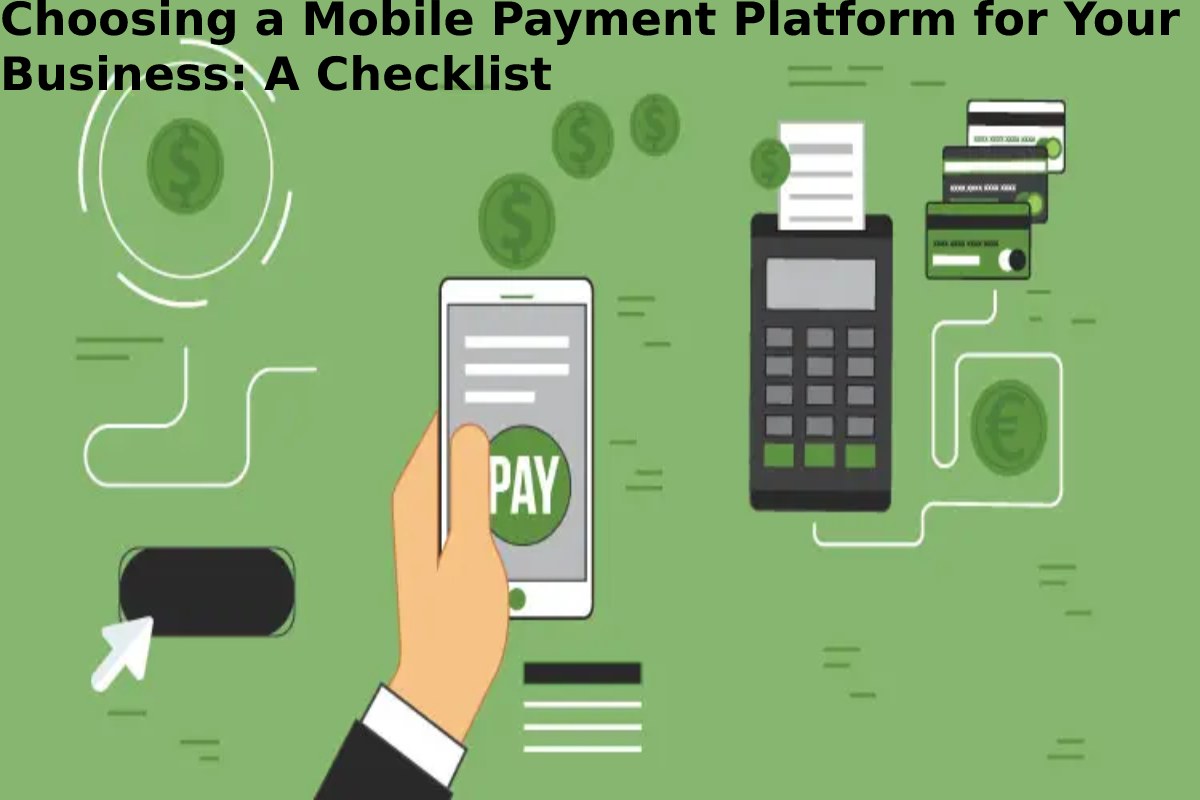
In today’s digital economy, a Mobile Payment Platform is no longer optional for businesses. Whether you operate a restaurant, retail store, online service, or freelance business, digital payments and contactless transactions have become standard expectations. Customers want seamless online payment processing, credit card payments, QR payments, and peer-to-peer transfers.
Choosing the right mobile payment platform impacts your transaction fees, integration capabilities, scalability, and long-term business growth. This checklist will help you make an informed, globally relevant decision.
Table of Contents
Why a Mobile Payment Platform Is Essential in 2026
Digital payment adoption continues to rise globally.
Global Digital Payment Adoption
| Country | % of Population Using Digital Payments | Growth Trend |
| USA | 89% | High |
| UK | 92% | High |
| India | 78% | Very High |
| China | 95% | Stable High |
| Australia | 87% | High |
Visual Guide – How a Mobile Payment Platform Works

Fees
Possibly the most important aspect to keep in mind when purchasing one of these platforms are the fees and costs. There are many ways in which you can get hit with these costs related to such a platform, including:
- Per transaction fee
- Percentage of fee
- Higher fees for some services
- Monthly costs of processing software
- Equipment costs, like mobile card readers
Make sure you have a good idea of what all fees are before making a purchase and make sure that you also figure out which fee structure will work best for you or your business.
Global Transaction Fee Comparison
Transaction fees vary significantly by country and platform.
Average Mobile Payment Platform Fees by Country
| Country | Avg Transaction Fee | Monthly Cost | Equipment Cost | Popular Apps |
| USA | 2.6%–3.5% | $0–$50 | $49–$299 | Square, Stripe |
| UK | 1.5%–2.9% | £0–£30 | £29–£199 | SumUp, Revolut |
| India | 0%–2% | ₹0–₹2,000 | ₹1,000–₹5,000 | Paytm, Razorpay |
| China | 0.6%–1% | Minimal | Low | Alipay, WeChat Pay |
| Australia | 1.6%–2.5% | AUD 0–30 | AUD 59–199 | Tyro, Square AU |
Resource: McKinsey Global Payments Report
https://www.mckinsey.com/industries/financial-services/our-insights/global-payments-report
Integration
Another important consideration is whether or not any mobile processing platform will easily integrate with your current systems. This integration means many things: Will it integrate with your accounting software and processor? What sort of changes will need to be made on your end of things, and how expensive will those changes get?
Integration With POS Systems & Accounting Software
It ensures your mobile payment platform works with your POS system, inventory management, and accounting software.
Integration Capabilities Comparison
| Feature | Basic Platform | Advanced Platform |
| POS Integration | Limited | Full |
| Accounting Sync | Manual | Auto-sync (QuickBooks, Xero) |
| CRM Integration | No | Yes |
| API Access | Limited | Full Developer API |
Scalability
Businesses, of course, are constantly trying to grow and expand their footprint. However, all of your business has to grow with you – and that includes your mobile processing platforms.
This begs the question: Can your platform easily grow with you? What happens if you need to offload accounting to an outside company, if you need additional people to be able to access the software, or if you need additional processors and readers?
Mobile Payment Platform Scalability Checklist
Checklist Points
- Multi-user access
- Multi-location support
- Cloud-based dashboard
- Custom reporting
- Currency conversion support
Scalable fintech solutions allow your business to expand internationally without changing systems.
Security
It goes without saying that your mobile payment system should be extremely secure, as your business is never more than one security breach away from losing years of hard-earned reputation.
As such, ask questions about the security of your potential payment processor. What sort of security do they use, and how often are they upgrading their security? Have they ever had a breach, and what procedures are in place to manage a potential breach?
Security Standards in Digital Payment Processing
Security is critical in online payment processing.
| Security Feature | Why It Matters |
| PCI DSS Compliance | Protects cardholder data |
| End-to-End Encryption | Secures transactions |
| Tokenization | Reduces fraud risk |
| Two-Factor Authentication | Prevents unauthorized access |
| Fraud Monitoring AI | Detects suspicious activity |
Features
A processing platform like this must be feature-rich. It must allow you the ability to use a maximum of features at a minimum cost. As such, find out what sort of features any potential platform comes with. What cards does it accept? Where can you make payments from? Can you make payments over the Internet?
Furthermore, what features come at what costs? Can you customize your package so you don’t spend money unnecessarily?
These are vitally important questions to protect yourself from overspending, underbuying, and making sure that you get the type of processing platform that best suits all of your needs.
Essential Mobile Payment Platform Features
| Feature | Basic Plan | Premium Plan |
| Credit/Debit Card Support | Yes | Yes |
| Contactless (NFC) | Yes | Yes |
| QR Code Payments | Limited | Full |
| Online Invoicing | No | Yes |
| Subscription Billing | No | Yes |
| International Payments | Limited | Full |
Top Mobile Payment Platform Options by Country
Where to Buy / Download
| Country | Top Apps | Website/App Store |
| USA | Square, Stripe | App Store / Play Store |
| UK | SumUp, Revolut | Official Website |
| India | Paytm, Razorpay | Play Store |
| China | Alipay | Official App |
| Australia | Square AU | App Store |
Pro Tip:
The cheapest mobile payment platform isn’t always the best. Look at long-term processing costs, integration capabilities, and scalability before making your decision.
Top 10 Mobile Payment Platforms of India
| Platform | Primary Use | Key Strength | Where to Get (Online) |
| Google Pay (GPay) | Unified payments + UPI | Widely accepted, fast UPI transfers | Play Store / App Store |
| PhonePe | UPI + Wallet + Bill Pay | Large merchant network | Play Store / App Store |
| Paytm | Wallet + UPI + QR payments | Full ecosystem (recharges, wallet, banking) | Official Website / Stores |
| BHIM UPI | UPI direct payments | Government-backed, simple | Play Store / App Store |
| Amazon Pay | E-commerce + UPI | Integrated with Amazon services | App Store / Play Store |
| MobiKwik | Wallet + UPI | Easy wallet top-up, EMI | Play Store / App Store |
| Axis Pay (Axis Bank) | UPI + QR | Bank-backed support | Play Store / App Store |
| ICICI Pockets | Wallet + UPI | Linked to ICICI bank, cashback | App Store / Play Store |
| PhonePe Switch | App ecosystem | Aggregates services (travel, food) | PhonePe App |
| WhatsApp Pay | UPI within chat | Extremely easy to use | WhatsApp App |
Conclusion
Choosing the right Mobile Payment Platform is about more than just accepting credit cards. It affects your transaction fees, accounting workflow, customer experience, and data security. Businesses in the USA, UK, India, China, and Australia all face different fee structures and digital payment trends.
By comparing costs, integration features, scalability, and security standards, you can select a platform that supports your long-term growth while keeping operations efficient and secure.